Collaboration and Conflict
Come!Unity press could not operate on its own. It built and was built by a sprawling network of different people with competing desires and different intentions. This had, in some cases, beautiful moments of collaboration. In others, however, the limitations became clear.
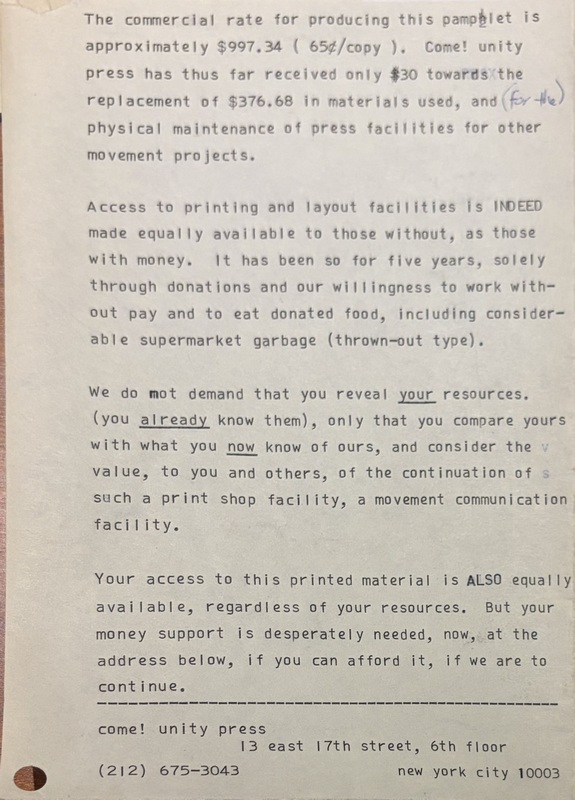
This letter castigating a group responsible for producing pamphlet entitled “Class Struggle in China” for not contributing enough toward the materials and labor. The job left Come!Unity on the hook for about $350 in materials—about $2,400 in today’s money according to the consumer price index (CPI Inflation Calculator, 2026). Come!Unity had a policy of “pay what you can” and not turning any individual or group away for lack of funds, and this is a case where it looks like that policy has run up against a limit.
Come!Unity could establish its independence from the hegemonic media ecology only to an extent, and only in brief moments. This drab typewritten slip shows a moment where the collaboration that enabled that glimpse of something beyond our society collapses.
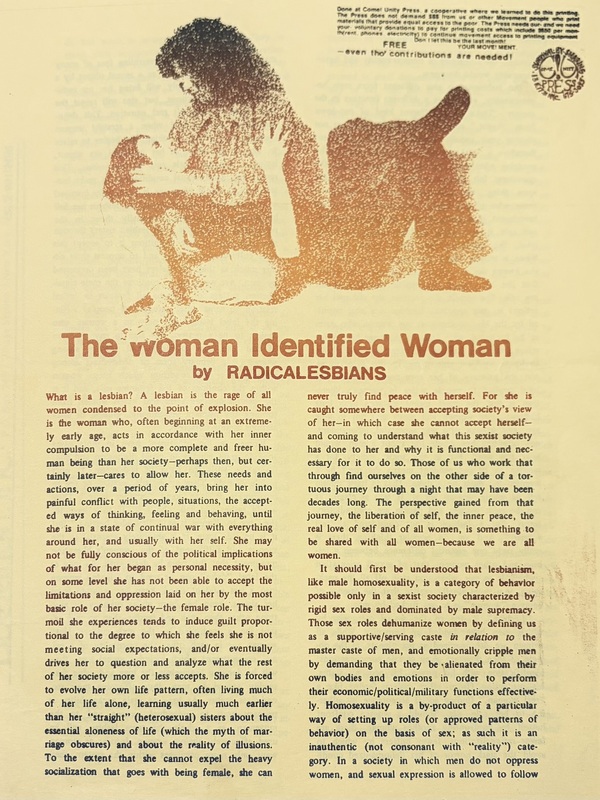
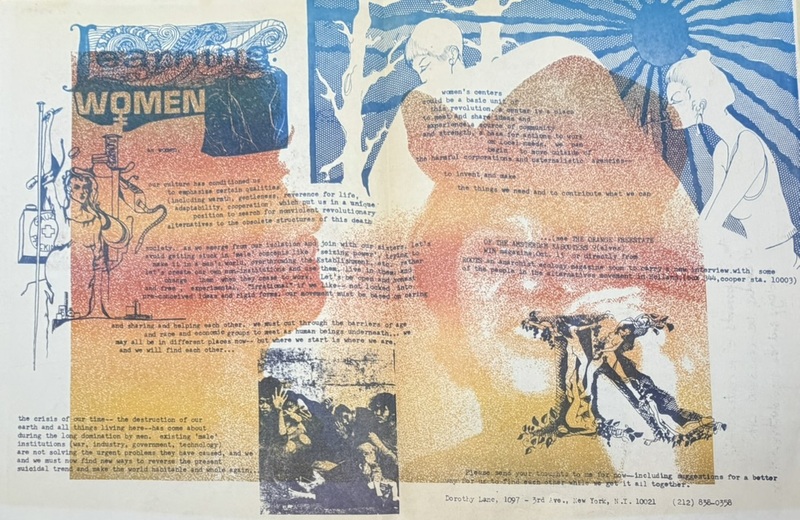
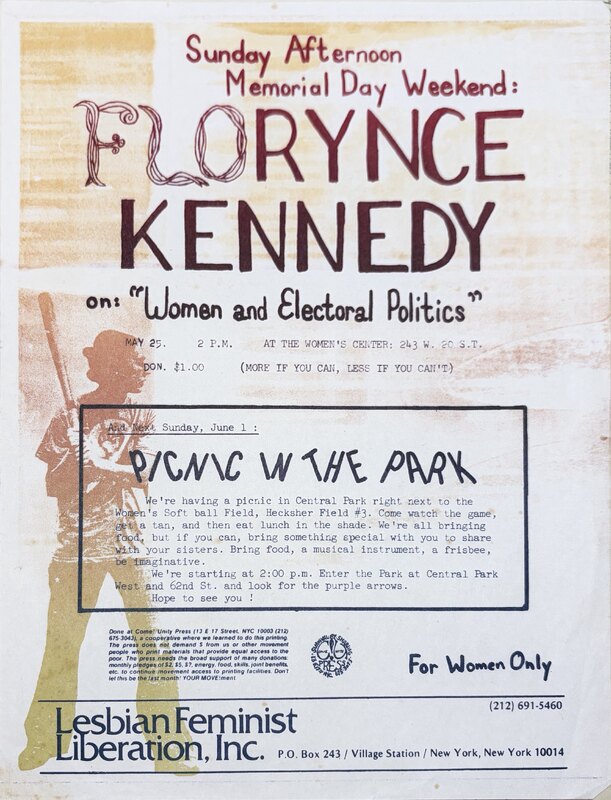
Feminist groups made particularly heavy use of Come!Unity. These groups were particularly interested in establishing a separate women's sphere. Through collaboration with Come!Unity, they were able to use the same playbook: periodicals, pirate texts, and making space through events and discourse, feminists created a sort of sphere (within or beside) the counter-public sphere Come!Unity was generally involved in.
This shows how these counter-publics grew mutually and enabled one another. While separate, both the nonauthoritarian socialists at the Freespace (and Come!Unity) and the Lesbian Feminists were both engaging in discourses about creating free space and were operating with a shared understanding of what that meant. This means they were reading each others works and were mutually inspired. They were able to imagine each other even when not present, a possibility enabled by the print media that Come!Unity produced.
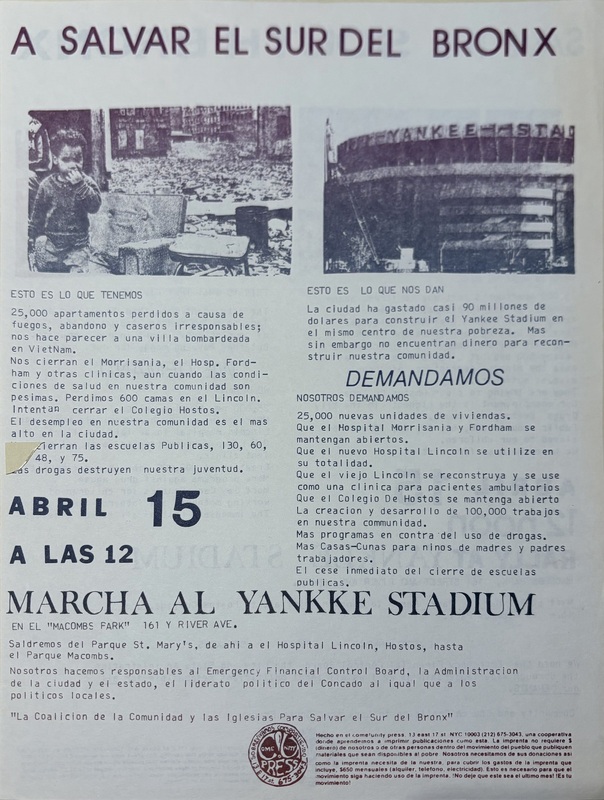
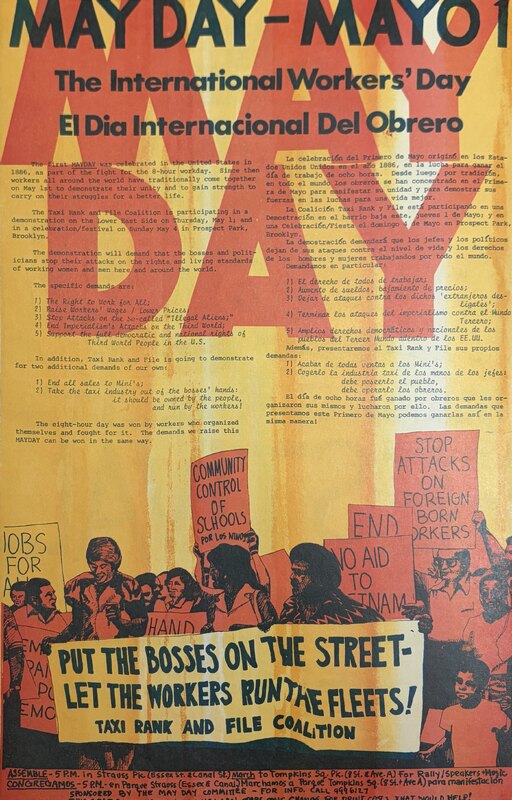
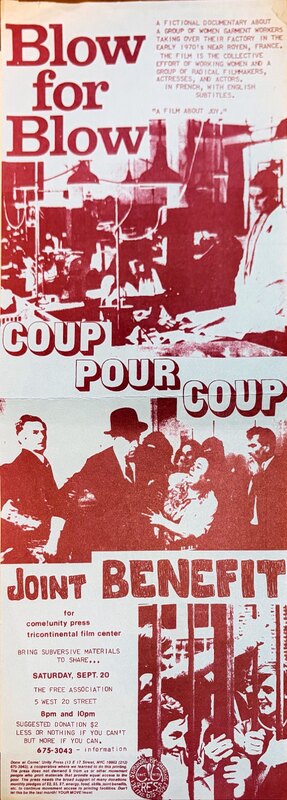
Bilingualism is on full display here, as well as the geographic reach of the Press up to the Bronx. Even the standard cliches that explain what Come!Unity press is and how it can be used are reproduced in Spanish. This is not merely a neutral decision, but a political one made in the context of an anti-imperialist mileu, represented by collaborations with tricontinental film center.