Pratt Institute Archives
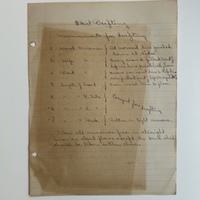
- This document from the Pratt Records of the School of Home Economics describes how to draft a skirt. Archiving an item like this, when focusing on textiles, might require catalogers to consider technical terminology and how to make this information searchable. Furthermore, this description can be used to inform how related documents are described.
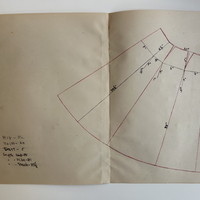
- Also from the School of Home Economics records, this document displays a drafted sketch of a circular skirt. The measurements and lines help the creator understand scale and form of this skirt in a two-dimensional form.
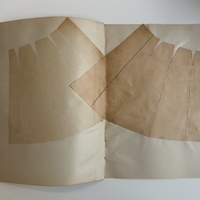
- This document from the School of Home Economics collection, a paper two-dimensional skirt pattern, illustrates another way that the creator of this item might visualize a pattern. These documents display the transformation of a pattern from written text to a gradually more dimensional object.
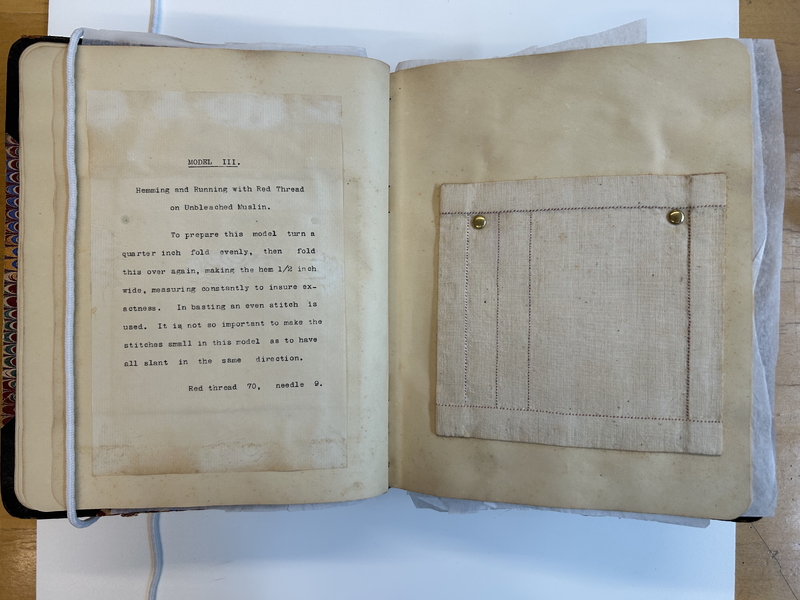
This sample book from the Pratt Institute Records of the School of Home Economics was displays student work. The workbook includes both a description of the exercise, and a completed version of it. This workbook also illustrates the amount of mixed-media that might exist within a single item. Sheets of protective paper can be seen layered between the pages underneath. The books in the Pratt Institute Archive are stored in a variety of ways, this book seems to be mainly in its original condition with the addition of the protective papers between pages. It is also interesting to consider the way that the two book pages provide information that is relevant to the other page. Consider the sewing example below, which is a page separated from but stored with the book that it was from. This sewing example paired with written information might communicate a different purpose or intent to researchers, and might be easier to contextualize with much more description already present.
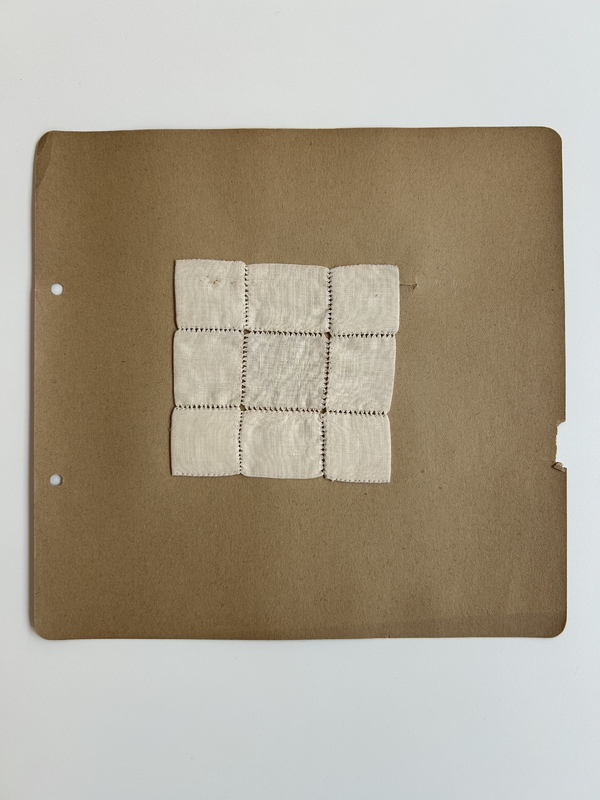
This item is from the Jessie Griffith Stone Sewing workbook, this workbook of sewing practice is stored as separate pages. The fabric is secured to the page with metal pins, although they are not very visible. This document reflects another method of preserving a collection that might be in a more damaged form or is frequently handled by researchers. Not only does this document illustrate various preservation and storage methods, but it reflects how information might be conveyed differently because of this. Many studies consider how items from a mixed-media archival collections are impacted by preservation methods that separate items. It can be essential to their continued storage and use, but is important to acknowledge and understand as a researcher. Similar issues can arise in digitization, when a single digital image might be removed from a broader context, or notable details about the item are left out.
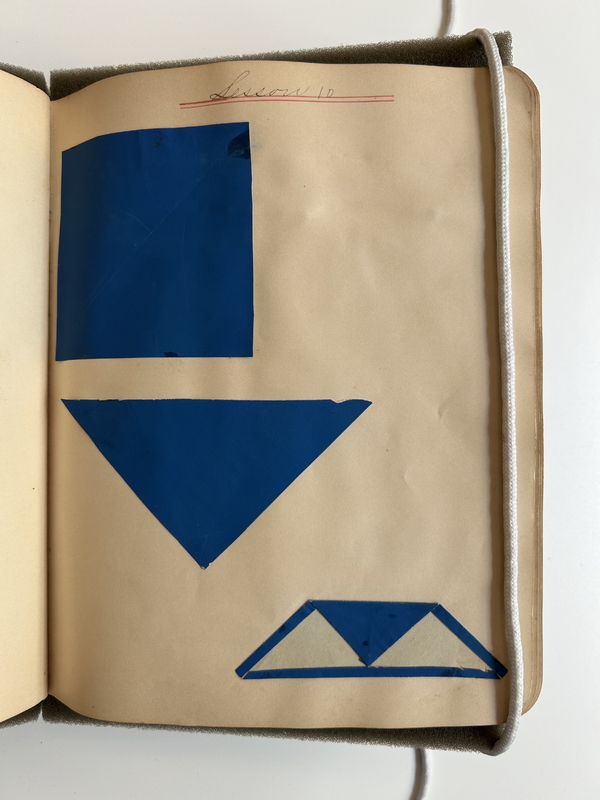
This document is from the Harriet Lehrfeld Thoms, Sewing Workbook in the Home Economics collection. It is a page from the student's workbook displaying their pattern practice using paper materials. The paper is adhered to the page, likely with glue. Other pages in the workbook include fabric materials or written text. Similarly to items in the Brunilda Gonzalez Collection, this item illustrates practicing techniques and the various mediums used to do so. This document is fascinating on its own, but also can be compared to other mediums in the collection and can highlight details about how garments are understood and created.
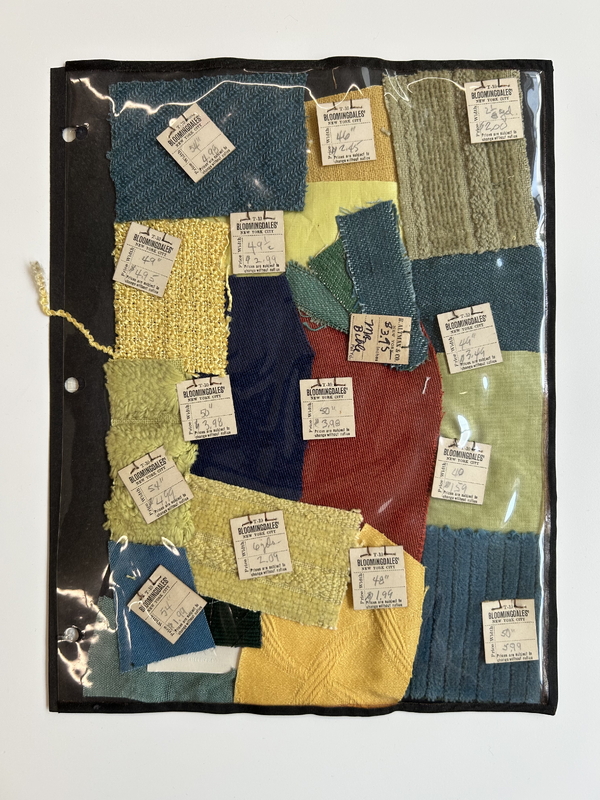
Not from a fashion or sewing collection, these textiles are from the Maryette Charlton papers on interior design. The fabric swatches are bundled together and kept secured under a plastic sheet. Digitization for an object like this might be especially complicated. There is a wide range of materials, textures, and a plastic sheet that could impact how this object appears in a photograph. In this image, the plastic creates significant glare that can obscure both the textiles below and the writing on the tags in the image. Similarly, the way the textiles are stored together creates a unique, layered appearance that could understood differently when viewed from various angles or under different conditions. This is an item that could be difficult to analyze in both an in-person and digital setting due to the quantity and complexity of visual information.