FIT Special Collections
Courtesy of the Fashion Institute of Technology | SUNY, Gladys Marcus Library Special Collections and FIT Archive
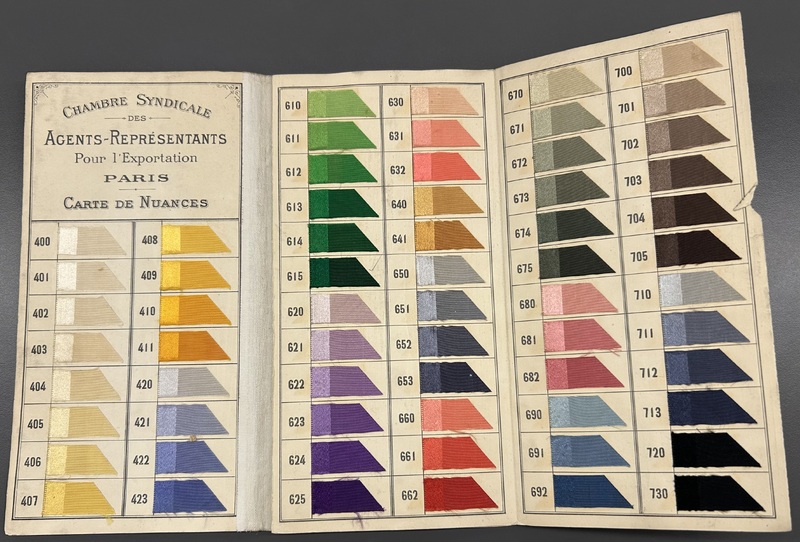
A French trade catalog of dyes from the company Chambre Syndicale des Teinturiers. The catalog, shaped like a small booklet, folds out into longer pages containing the fabric swatches. This catalog exemplifies the mixed-media items that archivists might have to work to preserve. The color and texture of these swatches are significant to this item, and it’s important to consider how it may have changed over time. This is importatnt for researchers aiming to understand the materials produced by this company, and understanding what may be missing from what they are seeing due to time and age of the item. This issue also arises when viewing a digitized item. Furthermore, the methods used to adhere the material to the paper might be important to consider for preservation.
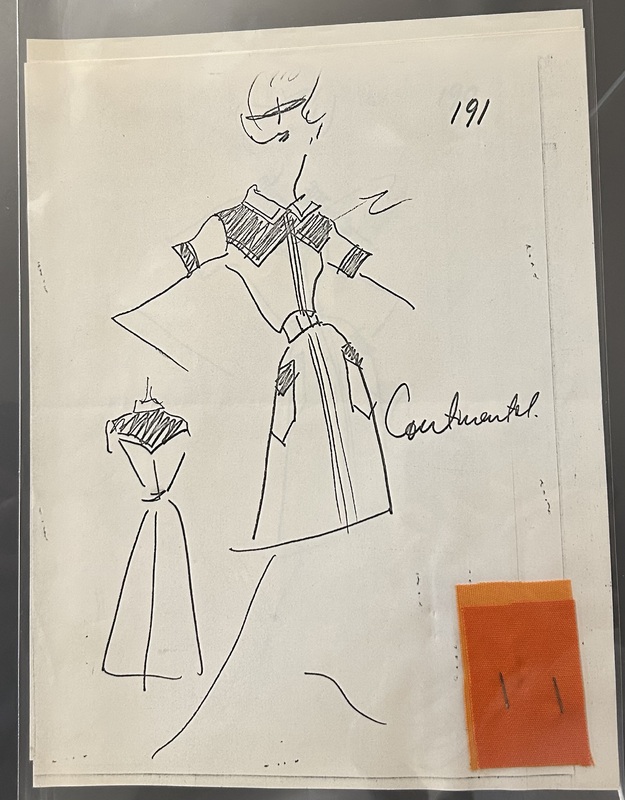
From the Continental Airlines stewardess uniforms scrapbook, this document features a fashion sketch alongside a textile swatch. The swatch is stapled to the page, and is part of a collection comprised of photographs, newspaper clippings, written documents, and additional drawings. This variety of materials could lead to questions about how to preserve this collection. These materials will change over time in varying ways, and might impact items around them. However, they also provide each other with essential contextual information. Careful consideration of archival storage and preservation is key. Digitization can also be a response to these concerns, but also must be approached with caution. Digitization changes the context and means of interaction with archival materials.
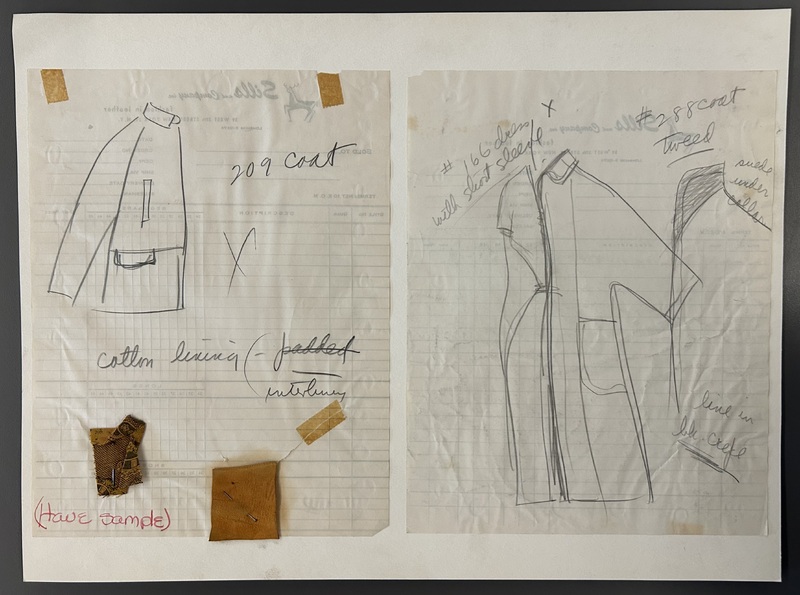
This item from the Bonnie Cashin collection displays a sketch of a coat and several swatches attached to the page. The age and effect of the various materials interacting is evident, there is also tape on the page that has aged. One of the swatches is not fully secured to the page. This page exemplifies many of the concerns expressed by Rachel Clarke in her own archival work, described in “Preservation of Mixed-Format Archival Collections: A Case Study of the Ann Getty Fashion Collection at the Fashion Institute of Design and Merchandising”, about the preservation of mixed-media fashion collections.
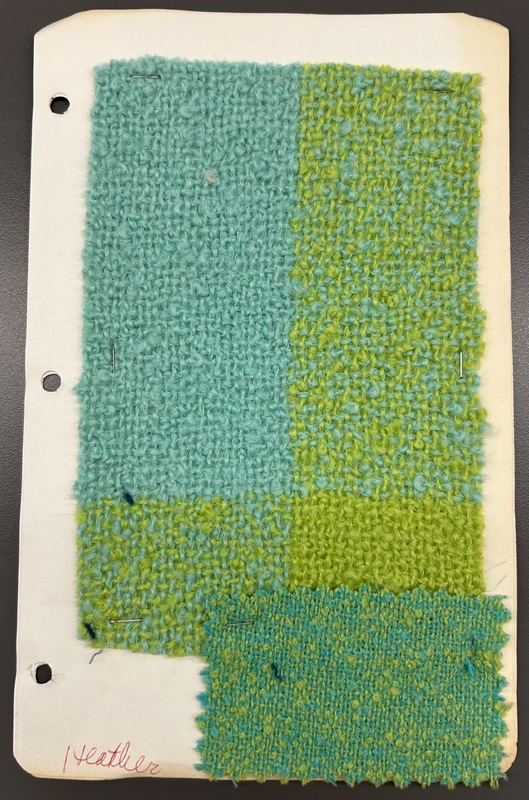
This object from the Bonnie Cashin collection displays two swatches, labeled, and adhered to the paper next to one another. The distinction in texture is important to this page, and demonstrate the importance of capturing details in image and metadata when digitizing items. Items such as this demonstrate how archival items in a digital format are examined differently than in a physical special collections. The patron cannot feel the various textures or observe them from any other angle. Some studies advocate for experiential and object-based learning that is not permitted by digital collections. Despite this, digital collections can be essential to greater access. Communicating these gaps in information can mean digitized archival items can be created and used with understanding by both patrons and archivists.
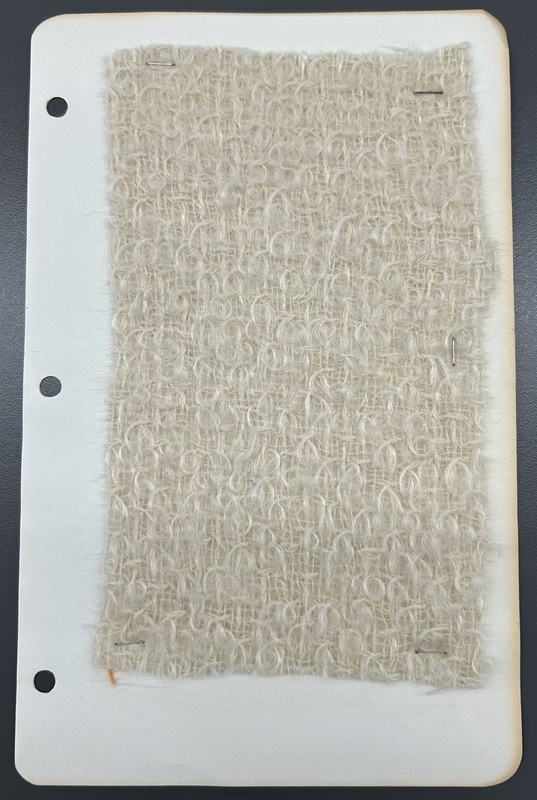
This textile swatch from the Bonnie Cashin collection is similarly adhered to the page and includes one textile swatch. This one is unlabeled. Research around how to label and describe this item could be incredibly important to a user looking for this item in a finding aid or digital collection. Describing textiles can be difficult because of the vast amount of terms and interpretations that could apply to an item. However, conducting research, describing items in detail, and using linked data can be a way to remedy the limits of searching and archival description.
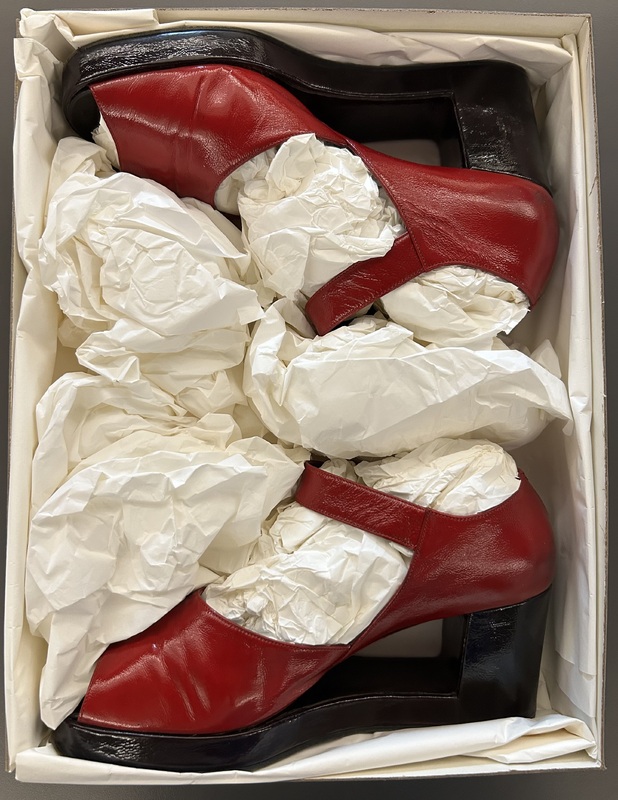
These red shoes are part of the Bonnie Cashin collection. These are an item not typically acquired by FIT Special Collections, but were a part of the larger collection. Note the storage method and the effort to preserve the item. These shoes raise questions about how to capture a three-dimensional form when digitizing. Some research studies describe digitization as a tool that can complement viewing archival objects in-person. This is outlined by studies such as Dinah Eastop's "New Ways of Engaging with Historic Textiles: Interactive Images Online", which presents digital technologies used to display and study archival items in a digitized but experimental format. As discussed by Eastop, these uses of digitization can expand research questions and encourage thoughtful examination of textiles rather than limit them.